Thermal Defect Mapping: Preempting Conduit Failures
Discover how our teams utilize high-resolution non-contact infrared thermal scanners to isolate macro-resistance vectors hidden inside concrete wall cavities.
Review Full Log →
Technical studies, infrastructure insights, and load safety recommendations prepared directly by our master deployment operators.
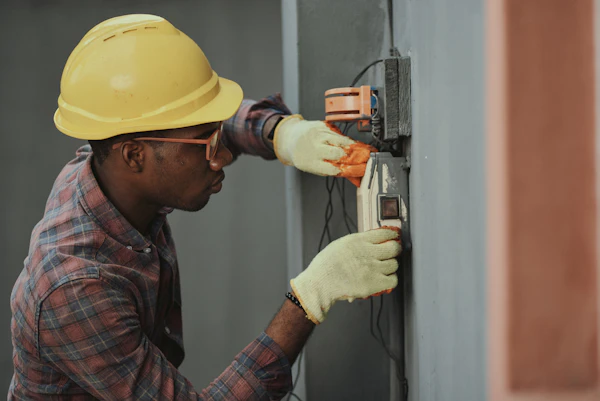
Discover how our teams utilize high-resolution non-contact infrared thermal scanners to isolate macro-resistance vectors hidden inside concrete wall cavities.
Review Full Log →Electrical infrastructure degradation inside high-density structures frequently materializes silently. Standard insulation breakdown occurs away from exposed surfaces, inside internal concrete conduit runs and embedded junction bays. Conventional inspection methods are reactive, identifying issues only after physical component melting triggers widespread grid system disruption.
The Mechanics of Macro-Resistance
When mechanical wire junctions become loose due to thermal expansion cycles, or when aluminum core connections degrade due to structural oxidization, localized resistance rises sharply. According to core thermodynamic principles, this resistance causes a rapid surge in thermal energy release. This heat directly destroys close circuit insulation paths, producing volatile micro-arcing events.
Implementing systemic thermal infrastructure scans at regular intervals mitigates total emergency grid collapses by over 80%, providing massive multi-tenant assets a predictable baseline of structural circuit safety.

An engineering assessment detailing why aging aluminum wiring systems pose critical hazards under modern high-amperage appliance loads.
Review Full Log →Properties built during past decades frequently integrated aluminum lines as a primary conduction asset due to immediate material cost advantages. However, long-term operations reveal significant material risks when these properties transition to handling modern commercial and residential appliance power demands.
The Core Material Vulnerabilities
Aluminum properties present unique physical behaviors that complicate distribution setups over extended service durations:
To secure historical structures under current appliance load curves, our engineers systematically replace obsolete links with high-grade multi-strand copper line setups protected inside fire-retardant enclosures. This restores stable distribution baselines across full floor plates.

Learn the engineering methodology used to evenly split single-phase assets across three-phase entrance feeds to maximize efficiency.
Review Full Log →Multi-tenant commercial centers rely heavily on incoming three-phase supply configurations to satisfy high capacity draws. However, when server rooms, large cooling pumps, and common single-phase light lines are connected haphazardly without structured load calculations, the system develops severe phase asymmetry.
Consequences of Asymmetric Phase Drift
When one phase carries significantly more current than adjacent lines, the neutral connection experiences heavy current feedback. This structural imbalance produces problematic voltage drops, resulting in frequent motor overheating and system-wide component stress.
Our team addresses imbalance anomalies using a disciplined, multi-step optimization framework:
By enforcing phase symmetry, buildings drop system impedance losses, lower unneeded heat build-up inside main breakers, and maximize asset lifetimes across all connected machinery grids.